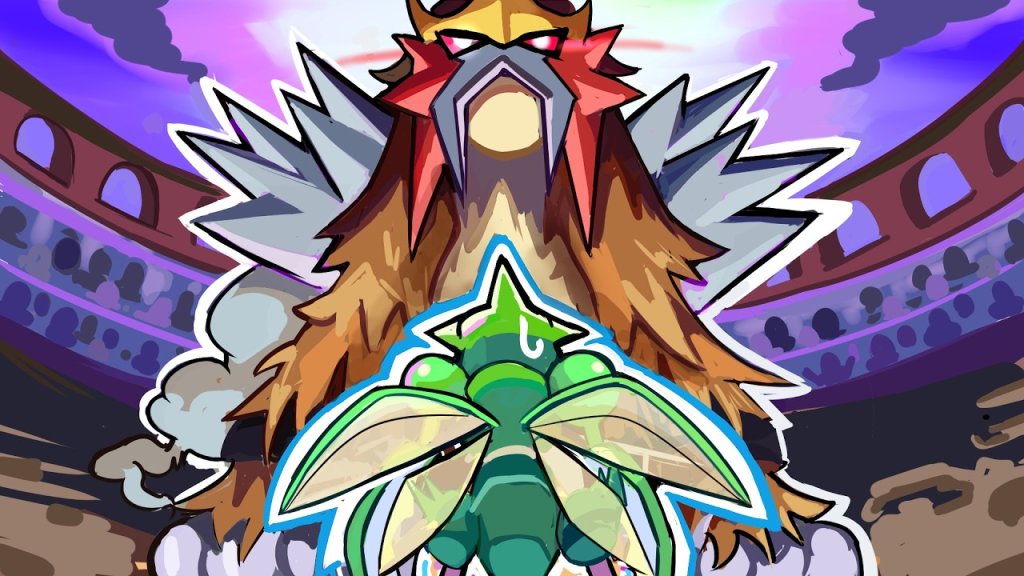

Wolfe Glick’s Mono-Bug Gauntlet: How One of Pokémon’s Best Players Took On Its Worst Type
Why Mono-Bug Was So Much Worse Than It Looked
Wolfe Glick (WolfeyVGC), a 2016 Pokémon VGC World Champion and long-time competitive creator, set himself a deceptively simple challenge for his channel: enter a serious Scarlet & Violet Regulation F tournament using only Bug-type Pokémon.
On paper, it sounds like another fun gimmick in a long list of challenge runs. In practice, Wolfe describes it as the hardest team-building and laddering project he’s ever attempted, even compared to:
- Climbing to rank 1 with Red’s team
- Running full Normal-types
- Using only unevolved Pokémon
The heart of the problem isn’t just that all six Pokémon share weaknesses. It’s specifically that Bug is arguably the worst type in competitive play, and Scarlet & Violet makes that even harsher:
- Offensively terrible: Bug is resisted by seven types and super effective on only three. With many top threats being dual-typed, Bug moves almost never hit for super effective damage.
- Only one relevant Bug in SV: Across more than three years of Scarlet & Violet, Wolfe notes there’s been only one Bug-type with over 1% usage for any meaningful period: Volcarona.
- Key support tools are missing: Among the Bug-types actually in the game, none get Fake Out, Follow Me, or Final Gambit. Even Accelgor, which learns Final Gambit, isn’t available in SV.
- Regulation F power creep: The format includes Paradox and legendary Pokémon, forcing mono-Bug to fight into threats like Flutter Mane, Urshifu, Chien-Pao, Raging Bolt, Tornadus, and the Incineroar–Rillaboom–Gholdengo core.
Wolfe played over 100 best-of-three sets—roughly 200–300 games—trying nearly every usable Bug-type in Scarlet & Violet, iterating through teams, and still felt like nothing worked. His first actual tournament attempt with mono-Bug ended 1–3, leaving him "demoralized, defeated, and completely discouraged."
Why So Many Bugs Didn’t Make the Cut
Before showing the final squad, Wolfe spends time explaining who he tried and why they failed, grounding any future comments from viewers in the reality that, yes, he really did look at everything.
Some examples:
-
Volcarona – The only Bug with notable usage in SV and a Pokémon Wolfe has called "the best Bug-type ever."
- Quiver Dance set: Needs strong partners and good support to set up safely; mono-Bug has neither.
- Support set (Rage Powder, Struggle Bug, Tailwind): Great on normal teams, but here it becomes a "bodyguard with nobody to guard."
- Volcarona ends up cut, despite being the best Bug on paper.
-
Masquerain – The only Intimidate Bug in the dex.
- Used with Choice Scarf to help check Urshifu.
- Even Scarf Masquerain is slower than Adamant Scarf Urshifu and fails to KO it with Air Slash.
- Dropped in favor of better options.
-
Galvantula – Tried as an Urshifu check.
- The issue isn’t just typing; it’s that competent players can easily pivot to Pokémon that aren’t weak to it, while Galvantula does negligible damage back.
-
Volbeat & Illumise – Early considerations thanks to Prankster.
- On paper, strong utility; in practice, they don’t do enough damage and have no strong Bug partners to justify their passive roles.
-
Slither Wing – Statistically one of the best Bugs.
- Its typing and awkward Speed tier make it unusable on the final build.
-
Leavanny – Considered as a manual-sun Urshifu check.
- It doesn’t even learn Solar Blade, despite having sword-like arms.
- Leaf Blade still fails to KO Urshifu.
-
Scizor & Scyther – Solid in many formats.
- Here, they crumble in the face of Intimidate and lack the bulk or power to justify their low base-power priority.
Wolfe emphasizes that if a Bug is in Scarlet & Violet, he either used it or did serious theory with it. What remains is a roster he genuinely believes is the best realistic mono-Bug team for Regulation F.
The Final Team: Six Bugs Doing the Impossible
After dropping Volcarona and cycling through failed ideas, Wolfe settles on a six-Pokémon squad that each solves specific structural problems.
Yanmega – The True Carry
Yanmega ends up being the MVP of the entire operation.
Key traits:
- Ability: Speed Boost – Gains Speed at the end of every turn.
- This lets Wolfe avoid committing to Tailwind while still creating speed control.
- Typing: Bug/Flying – Offensively critical for hitting Urshifu.
- Moveset:
- Detect – Stalls for Speed Boosts and avoids KOs.
- Air Slash – Primary Flying STAB.
- Bug Buzz – Bug STAB that matters vs certain Grass and Psychic types.
- Hypnosis (60% accuracy) – A high-variance but necessary equalizer.
- Item: Focus Sash – Guarantees Yanmega survives at least one hit.
- Tera Type: Ghost – Lets it dodge Fake Out and Extreme Speed when needed.
- EVs/Benchmarks:
- Built to outspeed Modest Landorus after boosts.
- Survives Mystic Water Urshifu Surging Strikes.
Because the team is so outclassed, sleep becomes one of Wolfe’s only comeback mechanisms. Hypnosis isn’t enough to win on its own, but it buys crucial turns against otherwise unwinnable board states.
Kleavor – Sharp Rocks and Emergency Speed
Kleavor fills multiple niche roles:
-
Typing: Bug/Rock
- Gives a Normal resistance, vital versus Tera Normal Dragonite.
- Rock coverage is essential versus Fire-types like Incineroar and Hearthflame Ogerpon.
-
Ability: Sharpness – Boosts slicing moves.
-
Item: Choice Scarf – Turns Kleavor into a surprise fast attacker.
-
Moveset:
- Stone Axe – Key move boosted by Sharpness; also sets Stealth Rock.
- Breaks Focus Sashes and adds chip across switches.
- X-Scissor – Strong Bug STAB boosted by Sharpness.
- U-turn – Pivoting option to reposition frail teammates.
- Tera Blast (Ghost) – Emergency coverage to hit Flutter Mane while outspeeding it.
- Stone Axe – Key move boosted by Sharpness; also sets Stealth Rock.
Kleavor proves especially valuable in matches where Stealth Rock damage plus priority (from partners like Lokix) can convert close rolls into KOs.
Lokix – Tinted Lens Glass Cannon
Lokix is Wolfe’s main late-game sweeper:
-
Ability: Tinted Lens
- Normally, resisted hits deal 0.5× damage; Tinted Lens doubles that back to 1×.
- As long as the target isn’t doubly resistant, they can’t lean on the type chart to shrug off Lokix’s attacks.
-
Item: Life Orb – Boosts damage at the cost of HP.
-
Tera Type: Dark – Maximizes Dark-type damage and matches its key attacks.
-
Moveset (mirroring Kingambit):
- Swords Dance – Doubles Attack.
- Sucker Punch – Dark priority to pick off threats.
- Knock Off – Reliable Dark STAB plus item removal.
- Protect – Buys time to stall or avoid obvious doubles.
Wolfe compares Lokix to a glass cannon version of Kingambit:
- Far worse stats and typing.
- Far higher damage into targets that would otherwise resist Dark thanks to Tinted Lens.
The catch is that Lokix is incredibly fragile. It needs dedicated support—usually from Venonat—to safely find a Swords Dance turn.
Venonat – Eviolite Redirection Tank
In a twist, the best Rage Powder user Wolfe can field isn’t Volcarona or Vivillon, but Venonat.
Why Venonat over Venomoth or other Rage Powder Bugs:
-
Item: Eviolite – Boosts both defenses on an unevolved Pokémon.
- Turns Venonat’s bulk from laughable to "surprisingly respectable."
-
Ability: Compound Eyes
- Increases all its move accuracies by 30% multiplicatively.
- Sleep Powder goes from 75% to about 97%.
-
Moveset:
- Rage Powder – Redirection to protect fragile set-up sweepers like Lokix.
- Sleep Powder – Near-perfect-accuracy sleep into targets not protected by Grass typing, Safety Goggles, or Overcoat.
- Struggle Bug – Spread special attack drop, still usable under Taunt.
- Protect – Standard defensive option.
-
Tera Type: Water – Gives Venonat a better defensive profile and occasionally lets it survive a key hit from Urshifu.
Despite all this, Wolfe still loses sets to back-to-back Sleep Powder misses, showing how compressed the margins are—he’s relying on even “97%” tools just to stay in games.
Araquanid – Water Bubble Wallbreaker and Wide Guard User
Araquanid has unimpressive base stats, but it has one of the most warped abilities in the entire Bug roster:
- Ability: Water Bubble
- Doubles the power of Water-type moves.
- Prevents burns.
- Grants a Fire resistance.
This transforms Araquanid into an actual damage threat:
-
Item: Clear Amulet – Prevents its Attack from being lowered, crucial versus Incineroar’s Intimidate.
-
Tera Type: Water – Maximizes Water STAB power and patching Flying/Rock weaknesses.
-
Moveset:
- Liquidation – Extremely strong Water STAB that can one-shot Incineroar, even through its Intimidate attempts.
- Wide Guard – Blocks spread moves like Bleakwind Storm, Dazzling Gleam, and other multi-target attacks.
- Substitute – Important versus Amoonguss to avoid Spore and Pollen Puff shenanigans.
- Protect – Standard.
Araquanid’s role is twofold: stand up to Tornadus’s spread moves and apply real damage in a metagame full of bulky Fire-weak targets.
Rabsca – The Surprise MVP vs Tornadus + Urshifu
Rabsca might be one of the least familiar Pokémon on the list, but Wolfe ends up calling this specific build “the most dangerous Rabsca in history” for this challenge.
Initially, he tested a support set:
- Tera Dragon, Psychic / Trick Room / Struggle Bug / Revival Blessing.
- The idea: twist dimensions, revive key Bugs, chip with Struggle Bug.
But this version lacked offensive presence. In the matchups where Trick Room would help, he didn’t have enough damage to capitalize on it. Rabsca was cut for Volcarona, then reimagined and re-added as a special attacker tailored for one brutal matchup: Tornadus + Urshifu + Amoonguss + Incineroar + Raging Bolt.
Final offensive build:
-
Item: Safety Goggles – Immune to Sleep Powder and Spore; ignores Amoonguss’s main tools.
-
Tera Type: Electric – Key choice for resisting Flying and nuking Water-types.
-
Moveset (as described in its offensive role):
- Tera Blast (Electric) – KOs Tera Water Urshifu from full with max Special Attack.
- Psychic – Heavy damage into Amoonguss and other Poison/Fighting-types.
- Bug Buzz – Coverage into Grass-types like Ogerpon Wellspring and Rillaboom.
- (Trick Room still appears in some sequences, used situationally rather than as a core game plan.)
The logic:
- Tornadus + Mystic Water Urshifu is a nightmare core.
- Tornadus can Bleakwind Storm and Taunt Venonat, while Urshifu’s Surging Strikes shreds everything.
- Tera Water Urshifu survives most normal checks.
With Tera Electric, max Special Attack Rabsca:
- Resists Bleakwind Storm.
- Threatens to one-shot Tera Water Urshifu with Tera Blast.
- Using Safety Goggles, it also heavily pressures Amoonguss with Psychic.
In multiple games, Rabsca’s ability to remove Urshifu in a single hit is the difference between an immediate loss and a playable game 3.
Tournament Reality: Playing With Six Bugs Against Real Teams
Once the final team is locked, Wolfe enters a large online tournament (7 Swiss rounds, 100+ players, cut to top 16). His realistic goal: win three rounds on a good day.
The matches shown in the video are a mix of crushing structural issues and improbable survivals.
Round 1: Chien-Pao, Dragonite, and Dondozo/Tatsugiri
Opponent’s threats:
- Chien-Pao + Dragonite – Priority from Ice Shard and Extreme Speed threatens to KO every Bug on Wolfe’s team with focused doubles.
- Dondozo + Tatsugiri (bulky, Leftovers, Body Press, Grass Tera) – A notorious late-game win condition.
Wolfe’s answers are limited:
- His best line into Dondozo is essentially Bug Buzz from Yanmega and passive chip.
- Lokix can theoretically Knock Off Dondozo’s item, but is likely too slow.
Some key dynamics:
- Wolfe leads Yanmega + Venonat and navigates early sleep turns reasonably well.
- Kleavor is used to clear Toxic Spikes and chip Weezing.
- Hypnosis misses on Dondozo in game one, which is devastating because so much of his win condition rests on sleep timing.
- Once Yanmega is gone, Wolfe has almost no way to cut through a Tera Grass Dondozo with this roster.
He adjusts in game two, trying to preserve Yanmega solely for Dondozo, and even experiments with Trick Room from Rabsca. But Stealth Rock from Ting-Lu, Weezing support, and the inherent durability of Dondozo overwhelm him.
His conclusion is blunt: “It’s very difficult to beat Dondozo with mono Bug.”
Round 2: The “Unwinnable” Mystic Water Urshifu + Tornadus Core
This is the matchup Wolfe calls “the single matchup where I thought it was unwinnable.” The opposing team includes:
- Mystic Water Urshifu (Water) with Tera Water
- Tornadus with Taunt and Rain Dance
- Amoonguss
- Goggles Incineroar
- Assault Vest Raging Bolt
- Landorus
Why it’s so bad:
- Tornadus Taunt shuts down Venonat completely.
- Mystic Water Tera Water Urshifu can devastate any Bug even without rain.
- Goggles Incineroar ignores sleep and redirection; AV Raging Bolt is bulky enough to tank multiple special hits.
This is exactly the matchup Rabsca’s new build is meant to help with.
Game 1:
- Wolfe gets a near-perfect early sequence: Venonat goes down at the right moment, Trick Room goes up, Araquanid wakes quickly to threaten Liquidations.
- Even so, he still cannot tank Urshifu’s Surging Strikes under rain; Rabsca falls from full to a single Surging Strikes line and he loses.
- He notes that even with everything going his way, the raw power of Tera Water Urshifu still breaks through.
Game 2:
- Wolfe leans into the Rabsca plan.
- Tera Electric Rabsca + Venonat manage to KO Urshifu in one hit with Tera Blast.
- Wide Guard on Araquanid helps manage Tornadus’s Bleakwind Storm.
- Despite a very tight midgame and awkward sleep dynamics, he steals game 2 and forces a game 3.
Game 3:
- He adjusts his lead, trying to avoid giving Tornadus free Taunts on Venonat.
- The set devolves into a razor-thin endgame around:
- Sleep rolls on Raging Bolt
- Whether Araquanid can two-shot targets at -3 Special Attack
- Yanmega’s Hypnosis connects and flinch chances
At one point Wolfe describes what it takes to win here as essentially “everything going my way”—sleep turns, accuracy, non-crits, and positioning all lining up.
Through a mix of favorable rolls and precise reads, he actually wins the set, showcasing how Rabsca, Araquanid, Yanmega, and Lokix each contribute at critical moments.
Round 3: Flutter Mane, Gouging Fire, Kingambit, Landorus, and Ogerpon Wellspring
This matchup is structurally better than the previous one but has a single enormous problem: Ogerpon Wellspring.
- Ogerpon’s Water Tera makes it take neutral or reduced damage while dishing out huge hits.
- Redirection and high-powered attacks make it hard to get clean hits with fragile Bugs.
Wolfe’s broad plan:
- Lean heavily on Yanmega for tempo and Chip.
- Reserve Tera Dark for Lokix in the late game to sweep with Sucker Punch and Knock Off.
- Araquanid is useful into most of the team but cannot touch Wellspring Ogerpon effectively, which complicates its value.
The games are marked by:
- Well-timed Hypnosis from Yanmega.
- Araquanid taking advantage of misaligned doubles.
- Lokix’s Tera Dark Swords Dance damage being so high that it can one-shot even bulky targets.
In one game, Wolfe misplays around speed and Sub on Landorus, and in another he laments not locking Kleavor into X-Scissor instead of Stone Axe in a key endgame. These illustrate a recurring theme: the margin for error with six Bugs is almost zero. A single conservative or slightly off read can swing an otherwise winnable position.
Still, he manages a dominant 4–0 in one of the games, which he notes might be the first time he’s ever 4–0’d someone with a full Bug roster.
Bug Month, Merch, and What This Challenge Says About Competitive Pokémon
This mono-Bug run doubles as the finale to Bug Month, a themed content stretch on Wolfe’s channel. He admits he didn’t know whether viewers would enjoy such a niche theme, but the positive reception has been a "really big bright spot" amid his more serious competitive uploads.
To mark the end of Bug Month, he briefly showcases limited-time merch:
- Bug Month shirts (with back designs)
- A hoodie he’s particularly fond of
- Stickers
- A tote bag that’s facing stock issues but may return (to be announced via community post)
He notes the Bug Month collection will stay up for two more weeks after the video before disappearing "for the foreseeable future, if not maybe forever." Viewers who enjoyed the series are encouraged to comment their favorite part of Bug Month and, as he half-jokes, "reward my suffering" by subscribing so he’ll forget how painful this challenge was and attempt more like it.
Beyond the humor, the challenge underlines a larger point about VGC team-building:
- Types are not created equal—Bug is structurally disadvantaged both in movepool and stat distribution.
- Format rules (like Regulation F allowing Paradox and legendaries) radically change which “fun” ideas are even remotely viable.
- Even a world champion putting in a full week of testing and hundreds of games can only barely make a mono-Bug concept tournament-playable.
Wolfe frames his mono-type experiments not as attempts to win tournaments, but to show viewers the realistic ceiling of off-meta or gimmick strategies—how far they can go when pushed to their absolute limit, and how hard you have to work just to get "playable" games.
Summary
In “I Entered a Tournament with 6 Bug Type Pokemon,” Wolfe Glick documents what he calls the most difficult challenge run of his nearly ten-year content career. Mono-Bug in Regulation F isn’t just cute—it’s structurally terrible:
- Bug’s offensive profile is weak, many of its best representatives aren’t in Scarlet & Violet, and the type lacks core support tools like Fake Out and Follow Me.
- The metagame is loaded with hyper-efficient threats like Urshifu, Tornadus, Flutter Mane, Raging Bolt, and Dondozo that prey on frail, underpowered Bugs.
After hundreds of test games and a failed first event, Wolfe settles on a final team built around Yanmega, Kleavor, Lokix, Venonat, Araquanid, and an offensively retooled Rabsca. Each fills a narrow, crucial niche: speed control, rock coverage, Tinted Lens priority damage, Eviolite redirection and sleep, Wide Guard wallbreaking, and a specialized Tera Electric nuke against Tera Water Urshifu.
The tournament footage shows just how thin the margins are: Hypnosis accuracy, sleep rolls, damage ranges, and Stealth Rock all become make-or-break factors. Even so, Wolfe manages to win some deeply unfavorable sets, particularly the “unwinnable” Tornadus + Mystic Water Urshifu matchup Rabsca was designed to handle.
Tying into the end of Bug Month on his channel, the video functions both as an entertaining sufferfest and as a clear, grounded case study in how far an expert player can stretch one of Pokémon’s weakest types in a high-powered format—and how, sometimes, even world champions can only barely make the impossible look playable.
Comments
No comments yet. Be the first to join the discussion.