
Meet "Jeff" — Europe's fast-moving military force built to act before NATO
A reaction that introduced a lesser-known force
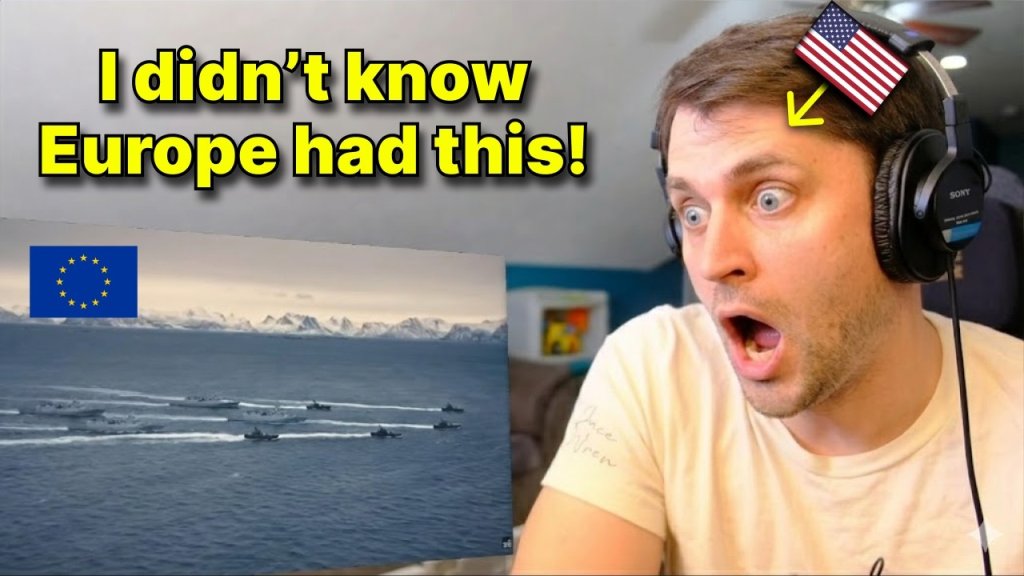
In a reaction video, Ryan Wuzer responds to a Military Atlas segment called "Jeff versus NATO" (shared with him by a viewer named Mark). The video walks through the Joint Expeditionary Force — frequently referred to in the reaction as "Jeff" — and explores how this 10-nation northern European coalition works and why it matters today.
Ryan's reaction mixes curiosity and surprise: he had not heard of the force before and repeatedly remarks on how useful and fast a grouping like this could be for northern European security.
What is the Joint Expeditionary Force ("Jeff")?
According to the video Ryan watched, the Joint Expeditionary Force is:
- A coalition of 10 northern European countries formed to provide rapid military response in Northern Europe.
- Designed to move quickly, act decisively, and respond without the need for full consensus from all NATO members.
- Focused on protecting Europe’s northeast flank and addressing emerging threats such as cyber attacks and undersea sabotage.
The video emphasizes that Jeff was created to fill a perceived gap: NATO’s strength is acknowledged, but its requirement for consensus can slow decision-making in fast-moving crises.
How Jeff formed and grew
Details given in the reaction include:
- The United Kingdom proposed the idea in 2012 as a faster, more flexible force for Northern Europe.
- The force became official by 2015.
- Membership expanded in stages:
- Initial members (seven): United Kingdom, Denmark, Estonia, Latvia, Lithuania, Netherlands, Norway.
- Finland and Sweden joined in 2017.
- Iceland joined in 2021, completing the ten-nation grouping.
The video frames Jeff as evolving from joint training and cooperation into a force conducting real-world operations after Russia’s 2022 invasion of Ukraine, including protection of undersea infrastructure and monitoring activity in the Baltic Sea.
Who contributes what — capabilities and structure
The reaction describes the coalition’s contributions and areas of focus:
- Leadership and specialist assets:
- The United Kingdom is portrayed as the lead, providing aircraft carriers, special forces, and intelligence support.
- Regional strengths:
- Nordic and Baltic states contribute highly trained infantry, cyber defense capabilities, and naval forces.
- Operational approach:
- Jeff operates on voluntary cooperation; each nation decides whether to participate in a specific mission.
- The force conducts regular military exercises and drills to improve joint operations, communication, and rapid deployment — with the ability to deploy within days.
- Non-traditional roles:
- Cyber defense, intelligence sharing, and countering hybrid threats are listed as ongoing priorities.
Ryan notes the force’s flexibility and speed repeatedly, and the video points out that Jeff does not operate under NATO’s Article 5-style collective-defense obligation in the same way.
How Jeff differs from NATO and why that matters now
The video — and Ryan’s commentary — underline several contrasts with NATO:
- Decision-making:
- NATO typically requires full consensus among its members before military action; Jeff can act without approval from 30+ countries.
- Speed and flexibility:
- Because participation in specific missions is voluntary and decided by member nations, Jeff aims to be faster to deploy.
- Focus:
- Jeff is regionally concentrated on northern Europe (Nordic and Baltic areas) and the northeast flank.
The video argues that recent events — Russian aggression in Ukraine, cyber incidents, and undersea sabotage — have exposed situations where faster, more nimble responses could be needed. It also raises the possibility that shifts in U.S. policy or presence could further incentivize European states to strengthen independent or regional arrangements.
Questions about expansion and the future
The reaction raises questions raised by commenters and the original video:
- Could countries like Poland or Germany join Jeff, and would their inclusion strengthen or slow the force?
- Should other nearby states such as Ireland or Canada consider participation or closer cooperation?
- Is the balance between speed (by staying small and agile) and strength (through expansion) the central strategic challenge for Jeff going forward?
Ryan and commenters also link Jeff’s existence to broader trends: some viewers see it as a pragmatic step toward more autonomous European security arrangements, especially in the face of perceived unpredictability in U.S. policy.
Final summary
The Joint Expeditionary Force — referred to informally in the reaction as "Jeff" — is presented in the Military Atlas video (and by Ryan Wuzer in his reaction) as a 10-nation northern European coalition created to provide rapid, flexible military response in the region. Proposed by the UK in 2012 and formalized by 2015, it grew to include Finland, Sweden, and Iceland, and shifted from training to operational roles after 2022. Key differences from NATO include faster decision-making through voluntary participation and a regional focus on the Nordic and Baltic theaters. The force’s future hinges on whether it expands and how it balances agility with additional capabilities.
Comments
No comments yet. Be the first to join the discussion.